

How Pointe Pest Control in Indianapolis Solves Year-Round Pest Problems for Homes and BusinessesTable of Contents
- Which Pest Problems Can Affect Indianapolis Properties?
- How Does an Inspection-Led Pest Control Plan Work?
- Why Prevention Matters Alongside Treatment
- What Should Property Owners Know About Rodent Prevention?
- Safety Considerations for Pest Treatment
- Residential and Commercial Pest Control in Indianapolis
- What to Do Before Requesting Service
- Frequently Asked Questions
- A Practical Next Step for Indianapolis Property Owners
Stopping a pest problem before it spreads starts with knowing what is causing it, where it is active, and what conditions are allowing it to persist. Pointe Pest Control in Indianapolis approaches pest management through inspection, identification, targeted service, and practical prevention guidance for local homes and businesses.
In Indianapolis, pests may remain out of sight long before they become impossible to ignore. Activity can develop in wall voids, kitchens, attics, basements, crawl spaces, garages, landscaping, and around utility penetrations. A visible insect, rodent dropping, nest, or web may be only one sign of a larger issue.
Local conditions matter. Seasonal weather changes, moisture around foundations, accessible food, standing water, dense vegetation, and cracks around a structure can all affect pest pressure. A useful service plan accounts for the property itself, the pest’s behavior, and the places where pests can feed, hide, breed, or enter.
For homeowners, property managers, and business operators, the goal is not simply to react to the pest that was seen that day. It is to reduce conditions that attract pests and to monitor whether the problem is actually improving after service.
As a provider of residential and commercial service in Indianapolis and across Indiana and Illinois, Pointe Pest Control offers pest management support for customers who need help identifying recurring activity, addressing entry points, and building a more pest-resistant property.
Which Pest Problems Can Affect Indianapolis Properties?
Pest concerns differ by property and season, but several issues commonly require professional inspection and a pest-specific response:
- Ants: Trails near food or moisture, soil nests, winged ants, and recurring indoor activity can indicate an established colony nearby.
- Bed bugs: Dark spotting, shed skins, bites, or insects around beds and upholstered furniture should be investigated promptly.
- Roaches: Nighttime sightings, droppings, egg cases, and odors can point to harborages near food, water, or warmth.
- Rodents: Droppings, gnaw marks, nesting materials, scratching sounds, and damaged food packaging are important warning signs.
- Spiders: Webs, egg sacs, and repeated sightings may increase when insects are available as prey around a building.
- Mosquitoes: Frequent biting activity outdoors and areas of standing water can make outdoor spaces less comfortable.
- Wasps and bees: Nests, repeated flight paths, or defensive activity near doors, eaves, decks, and outbuildings require careful handling.
- General household pests: Unidentified insects should be inspected rather than treated with a one-size-fits-all product.
How Does an Inspection-Led Pest Control Plan Work?
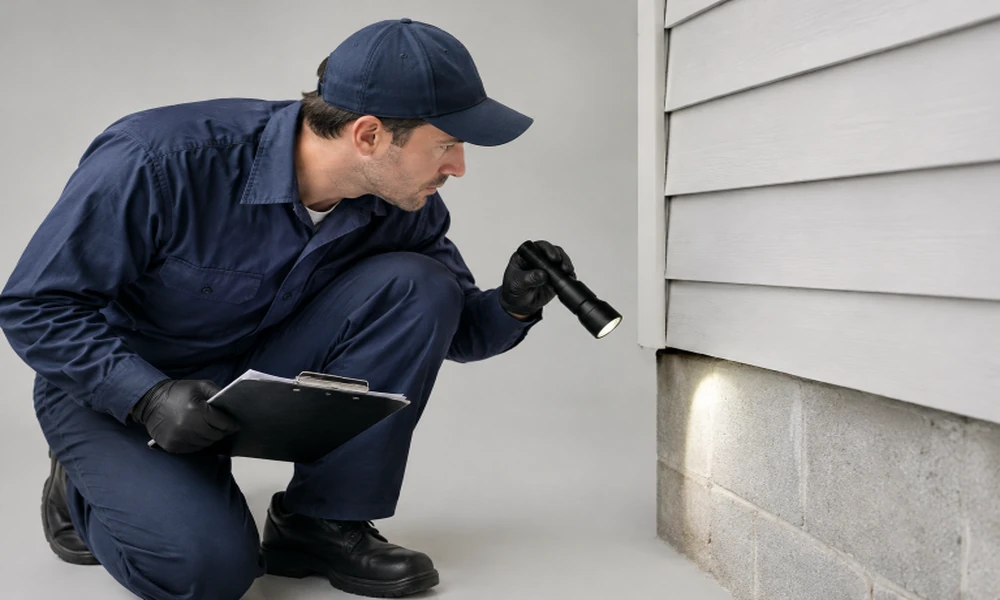
Accurate identification is the foundation of effective pest management. Different pests have different hiding areas, feeding habits, and control needs. A useful inspection can help determine whether activity is isolated, recurring, or connected to an overlooked entry point or moisture source.
- Identify the pest. Technicians evaluate visible evidence and likely activity patterns.
- Inspect key areas. This can include interior rooms, foundations, doors, windows, attics, crawl spaces, garages, landscaping, and utility openings.
- Assess the risk. The size, location, duration, and apparent source of activity affect the recommended response.
- Develop a targeted plan. Treatment should match the pest, the property, and the conditions found during inspection.
- Recommend prevention steps. Customers may be advised to seal gaps, reduce clutter, manage food and garbage, address leaks, or remove standing water.
- Monitor results. Follow-up observation helps determine whether activity is declining and whether additional action is needed.
Why Prevention Matters Alongside Treatment
Professional pest control is most effective when treatment is paired with prevention. The EPA describes integrated pest management principles as a process involving monitoring, accurate identification, prevention, and the selection of controls based on effectiveness and risk. Those principles can be applied in Indianapolis homes, gardens, workplaces, and other non-agricultural settings.
- Seal cracks and gaps around doors, windows, foundations, vents, and pipes.
- Store food and pet food in closed containers, and clean spills promptly.
- Reduce clutter where insects or rodents may shelter.
- Correct leaks, improve drainage where practical, and reduce excess moisture.
- Remove standing water that can support mosquito breeding.
- Keep vegetation, stored materials, and debris from resting directly against the structure when possible.
What Should Property Owners Know About Rodent Prevention?
In Indianapolis, rodents can be active before anyone sees one. The Centers for Disease Control and Prevention notes that mice can fit through openings about one-quarter inch wide, which makes detailed exclusion work important around kitchens, basements, crawl spaces, attics, garages, vents, and utility lines. Its guidance on sealing gaps and protecting food and water sources also emphasizes keeping garbage secured and outdoor areas clean.
When rodents are entering inaccessible areas or signs continue after basic prevention steps, professional help can be appropriate. Avoid direct contact with rodent waste, and use proper cleanup practices rather than sweeping or disturbing contaminated material without precautions.
Safety Considerations for Pest Treatment
Treatment decisions should consider the pest, the location of activity, the severity of the problem, and the people and animals using the property. Pointe Pest Control states that it uses EPA-approved products and evaluates pest activity before recommending treatment. Product labels, preparation instructions, ventilation needs, re-entry guidance, and precautions for children and pets should always be followed.
Reducing unnecessary pesticide use does not mean ignoring a serious infestation. It means choosing measures that fit the situation, including sanitation, exclusion, monitoring, trapping, targeted treatment, or a combination of methods.
Residential and Commercial Pest Control in Indianapolis
For homeowners, inspection can reveal pest access points and conditions that are difficult to spot during daily routines. Early attention may help limit issues involving rodents, carpenter ants, bed bugs, roaches, and other pests that can spread through concealed areas. No inspection can guarantee that every future infestation will be prevented, but it can support earlier detection and better planning.
Businesses often have additional needs, including routine monitoring, documented inspections, discreet service, and plans that fit operating schedules. Offices, restaurants, retail spaces, warehouses, multifamily properties, and managed sites may all benefit from a consistent approach that addresses pest activity before it disrupts operations or affects customer confidence.
What to Do Before Requesting Service
- Write down when and where pest activity was first noticed.
- Take photos of pests, damage, droppings, nests, or entry points when it is safe to do so.
- Secure food, pet food, garbage, and recycling.
- Remove standing water and address obvious leaks.
- Avoid mixing or applying multiple pesticides without professional direction.
- Do not disturb active stinging-insect nests, rodent nests, or suspected bed bug areas.
Frequently Asked Questions
What pests does Pointe Pest Control in Indianapolis address?
The Indianapolis service page lists ants, bed bugs, roaches, rodents, spiders, mosquitoes, wasps and bees, and general household pests.
Does Pointe Pest Control serve businesses as well as homes?
Yes. The company offers residential and commercial pest control services, with plans that can be adapted to the property type and inspection findings.
When should an Indianapolis resident call for pest control?
Consider requesting an inspection when activity repeats, damage appears, droppings or nests are found, bites occur, scratching is heard, or basic prevention has not resolved the issue.
A Practical Next Step for Indianapolis Property Owners
Pest management works best as a process: identify the pest, inspect the property, address active conditions, and reduce opportunities for pests to return. Pointe Pest Control’s Indianapolis office is located at 5603 W. Raymond St., Suite G, Indianapolis, IN 46241. Property owners with recurring pest concerns can request a free estimate or call (317) 767-1299 to discuss the next appropriate step.