

Key Takeaways
- Seal entry points to prevent pests from entering your home.
- Maintain cleanliness to eliminate food sources that attract pests.
- Adapt pest control measures to seasonal pest behaviors.
- Regularly inspect and maintain your home’s exterior and interior.
Table of Contents
- Spring Prevention Tips
- Summer Prevention Tips
- Fall Prevention Tips
- Winter Prevention Tips
- General Pest Prevention Strategies
- When to Seek Professional Help
- Conclusion
Maintaining a home free of pests is a year-round task that requires attention as seasons change and different pests become active. It involves more than just reacting to visible problems. Proactive steps tailored to each season help prevent infestations before they start. By staying diligent and following proven prevention techniques, you safeguard your living environment, comfort, and property value. If you want professional assistance or expert advice, trusted companies like Romney Pest Control can provide specialized guidance and support.
Each season brings unique pest threats. From ants and mosquitoes in spring to rodents seeking warmth in the winter, your prevention plan must adjust accordingly. Consistency in these efforts is essential, ensuring your home remains clean, secure, and less attractive to intruders of all kinds. Seasonal maintenance, along with daily habits such as proper storage and waste management, is your best defense. Even with careful preventive measures, unforeseen pest issues can arise. When home remedies fall short or infestations seem overwhelming, enlisting a professional is the smart choice. Integrated pest management by licensed experts not only addresses the current problem but also helps you develop a solid prevention plan. Maintaining awareness of common pest problems for your region, combined with regular home assessments, can make a significant difference. As you shape your pest prevention approach, staying informed about current guidance is crucial. Reputable sources, such as the EPA’s Do’s and Don’ts of Pest Control, offer valuable recommendations to support year-round pest management.
Spring Prevention Tips
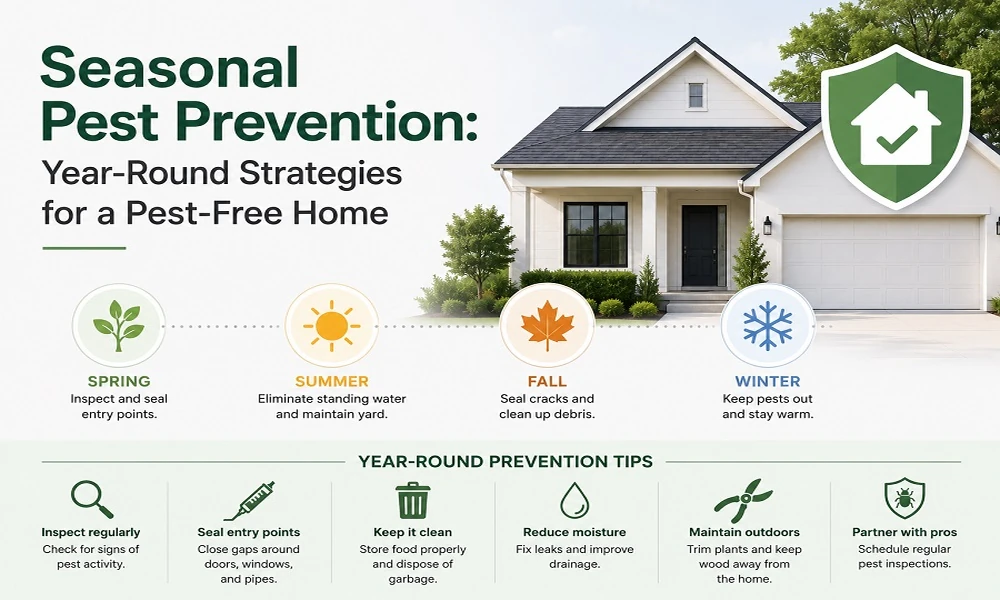
As winter fades, spring invites pests such as ants, termites, and mosquitoes. Early intervention limits their ability to invade. Start by inspecting and sealing entry points around windows, doors, and the foundation of your home. This prevents ants and other insects from establishing colonies inside. Eliminate standing water throughout your property, as mosquitoes lay eggs in even the smallest pools. Check birdbaths, planters, and clogged gutters. Keeping your yard tidy by removing leaves and trimming grass also discourages pests from nesting and hiding.
- Inspect and Seal Entry Points: Examine your home’s structure for cracks, gaps, or deteriorated weather stripping, and repair these promptly.
- Eliminate Standing Water: Address poor drainage and empty containers that may collect water to reduce mosquito breeding.
- Maintain Yard Cleanliness: Remove debris and clutter from the yard to limit shelter for pests.
Summer Prevention Tips
Summer’s warm temperatures and abundant food sources make it peak season for flies, wasps, cockroaches, and similar pests. Food safety is paramount: always store food in airtight containers, and immediately clean up crumbs and spills to avoid attracting insects. In the kitchen and outdoor eating areas, vigilance pays off. Natural methods, such as using citrus peels, are effective for discouraging spiders. Rub citrus peels on windowsills and door thresholds to release limonene, which spiders dislike. Also, repair or replace any torn screens to keep flying intruders outside. For more seasonal pest control guidance, Consumer Reports shares additional summer prevention insights.
- Proper Food Storage: Use sealed containers for both pet and human food, and manage trash regularly.
- Use Natural Repellents: Try remedies like citrus peels to discourage spiders and other insects from entry points.
- Install Screens: Make sure door and window screens are intact and fit properly.
Fall Prevention Tips
As temperatures cool, rodents and insects look for warmth and food indoors. Focus on keeping exterior cracks and gaps thoroughly sealed. Pay particular attention to areas around utility pipes, vents, and the roof, which are common entry points for mice and insects.
- Seal Cracks and Gaps: Use caulk or steel wool to close even small openings where pests could squeeze through.
- Store Firewood Properly: Keep firewood stacks off the ground and at least 20 feet away from the house to deter nesting pests like termites and rodents.
- Clean Gutters: Remove leaf build-up and debris to prevent water pooling, which can attract both insects and rodents.
Winter Prevention Tips
Winter drives rodents and insects inside in search of shelter. Inspect attics and basements throughout the season, as these are common hiding spots for both rodents and insects. Maintain household cleanliness, especially in kitchens and pantries, and use sealed containers for all food. Setting traps in vulnerable areas increases your chance of stopping invasions early.
- Inspect Attics and Basements: Check for droppings, gnaw marks, or other pest signs, and seal entry points promptly.
- Maintain Cleanliness: Regularly clean floors and surfaces, and avoid leaving pet food out overnight.
- Use Rodent Traps: Strategically place traps near suspected entryways and frequently check them.
General Pest Prevention Strategies
Year-round pest management includes regular inspections, effective waste management, and ongoing landscape maintenance. Schedule monthly walk-throughs to identify and address early signs of pest activity. Always dispose of garbage properly, keeping bins covered and away from entry doors.
- Regular Inspections: Look for droppings, chewed materials, or unusual noises inside walls and ceilings.
- Proper Waste Management: Keep trash and recycling bins sealed and emptied routinely.
- Maintain Landscaping: Trim tree branches and shrubbery so they do not touch the house, minimizing pest pathways.
When to Seek Professional Help
If pests persist despite your prevention efforts, professional intervention may be necessary. Expert pest control services can assess problems, treat infestations, and help you reinforce preventive measures in the future. Persistent issues or complex situations, such as structural infestations or health concerns, warrant contacting licensed professionals for thorough evaluation and support. By following seasonal and year-round strategies, you keep your home pest-free, safe, and comfortable for you and your family.
Conclusion
Keeping your home pest-free requires consistent attention year-round. By sealing entry points, maintaining a clean home, managing moisture, and adjusting your prevention strategies to match seasonal pest activity, you can significantly reduce the risk of infestations before they become serious problems. Routine inspections of both your home’s interior and exterior also help identify potential issues early, making them easier and less costly to address. While preventive measures are highly effective, some pest problems may require professional expertise. If you notice recurring infestations or signs of structural pests, consulting a licensed pest control specialist can provide targeted solutions and long-term protection. Combining seasonal maintenance with year-round vigilance is the most effective way to protect your home, preserve its value, and create a healthier, more comfortable living environment for you and your family.