

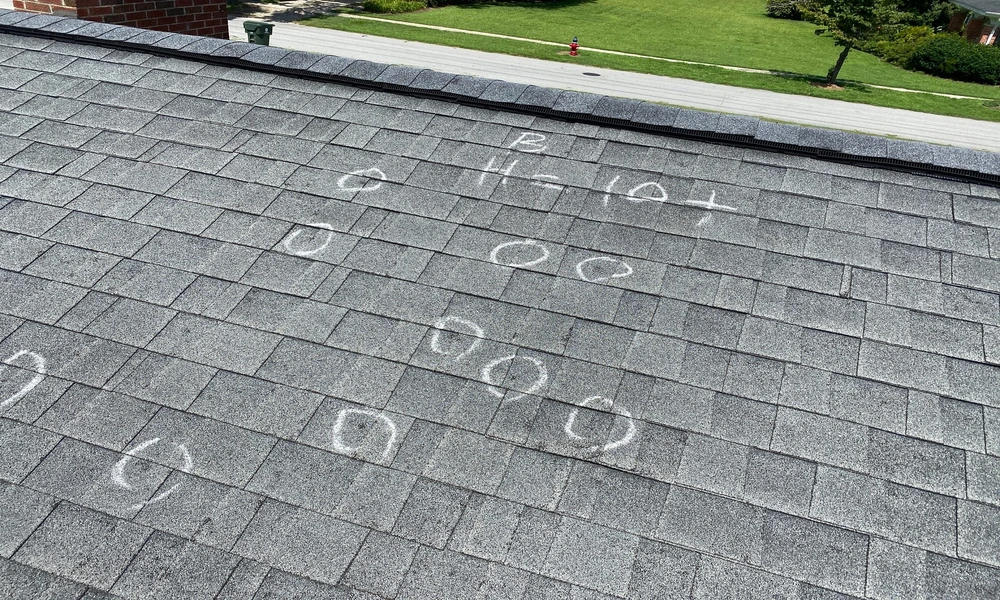
A roof is a stack of materials, and each one has a separate job. Hail affects every layer differently. A stone that leaves a faint mark on the surface can fracture the fiberglass mat beneath it, break a sealant bond, or dent a flashing joint that water finds months later. To read storm damage correctly, you have to look at the roof the way it was built: from the outer granules down to the wood deck, then out to the edges where the roof meets the walls.
This distinction now has real financial weight. In North Texas and other hail-prone regions, many homeowner policies separate functional damage, which weakens the roof’s ability to shed water, from cosmetic damage, which only changes how the roof looks. Some carriers pair premium credits for impact-resistant shingles with exclusions for cosmetic hail marks. Courts have generally enforced those clauses when the evidence shows nothing beyond dents. Which layer the damage sits in, and whether it affects performance, often decides what gets fixed and who pays for it.
That makes the inspection as important as the repair. A thorough inspector marks test squares on each slope, circles every confirmed hit, and checks soft metals, window screens, and AC condenser fins. These collateral marks help establish the size and direction of the hail and tie the damage to a specific storm date. Without that groundwork, a legitimate claim can stall on a single adjuster’s opinion.
Homeowners across the DFW area who want that groundwork done properly can turn to Guardian Angel’s Roofing and Construction. The team performs detailed storm damage inspections and supplies documentation to support insurance claims. From there, it handles roof repairs, full replacements with asphalt and architectural shingles, and exterior work on siding, soffit, and fascia. If a storm has rolled through recently, book a free roof inspection before the adjuster visits, so you know what is on your roof before anyone else defines it.
The Granule Surface
The top layer is made of ceramic-coated mineral granules pressed into asphalt. They block ultraviolet light. Hail knocks them loose and leaves round black spots of exposed asphalt. Under Texas sun, with roof surfaces often far hotter than the air, that exposed asphalt oxidizes and turns brittle quickly. Some granule shedding is normal on new and aging roofs. Hail loss looks different: random spots, concentrated on the slopes that faced the storm.
The Asphalt and Fiberglass Mat
Beneath the granules sits the shingle’s core, a fiberglass mat saturated with asphalt. A hard strike can fracture this mat while the surface barely changes. Pressed with a thumb, the spot feels soft, like a bruise on fruit. That fracture then spreads through daily heating and cooling until the shingle splits. Impact-resistant shingles use rubber-modified asphalt that flexes on impact. They tend to dent instead of crack, which is exactly why the cosmetic question comes up so often with them.
Sealant Strips and Fasteners
Each shingle course is bonded to the one below it by a heat-activated adhesive strip. Hail combined with gusting wind can break that seal. Unsealed tabs lift during later storms, and nails can work loose. Older shingles that have lost flexibility may crack when a crew lifts them for spot repairs. That is one reason repairs on aged roofs sometimes turn into replacements, especially when the original shingle line has been discontinued and nothing matches.
Underlayment
Synthetic underlayment or felt covers the deck, with self-adhering membrane in valleys and around penetrations. Hail rarely reaches this layer directly. Problems start once a fractured shingle exposes it to sunlight and rain, because most synthetics break down under prolonged UV. This delay explains why some homeowners notice ceiling stains a season after a storm and never connect the two.
The Roof Deck
Plywood or OSB decking only takes direct hail damage from very large stones or on badly deteriorated roofs. The bigger threat is slow water entry. OSB swells, delaminates, and develops soft spots that show up when the old roof comes off. Replacement contracts usually price damaged decking per sheet for this reason.
Flashing, Valleys, and Roof Penetrations
Valley metal, drip edge, step flashing, turbine vents, and pipe boots are all metal, plastic, or rubber, and each reacts differently. Dented valley metal may still channel water perfectly well, which places it at the center of many cosmetic disputes. A cracked rubber pipe boot or a split plastic vent cap is the opposite: a direct leak path that is small, easy to miss, and urgent.
Gutters, Fascia, and Soffit
Gutters dent easily and serve as a useful record of hail size. Behind them, fascia boards can split or lose their paint seal, which invites rot along the roof edge. Vinyl and aluminum soffit panels crack or puncture. Once that happens, wind-driven rain, insects, and birds get in, and the attic intake ventilation that keeps shingles from overheating can be disrupted.
Siding and the Wall Plane
Vinyl siding cracks or gets holed, especially when the material is cold. Fiber cement chips at the corners. Painted wood shows spatter marks where hail hit it. Damage usually concentrates on the elevations facing the storm, and that directional pattern helps separate fresh impacts from years of ordinary wear.
The Layers Side by Side
| Layer | What hail leaves behind | What happens if it is ignored | How damage is usually classified |
|---|---|---|---|
| Granules | Round spots of exposed asphalt | Faster UV aging and brittleness | Functional when widespread |
| Fiberglass mat | Soft bruise, hidden fracture | Splitting within a few seasons | Functional |
| Sealant strip | Lifted or unsealed tabs | Wind blow-off in later storms | Functional |
| Underlayment | Exposure through broken shingles | Delayed leaks and stains | Functional |
| Valley and vent metals | Dents and creases | Often none unless seams open | Frequently disputed as cosmetic |
| Pipe boots and plastic caps | Cracks and splits | Active leaks at penetrations | Functional |
| Soffit and fascia | Cracked panels, split paint | Pests, rot, poor attic airflow | Depends on breach |
| Siding | Holes, chips, spatter | Moisture behind the wall | Functional if breached |
Where Impact-Resistant Roofing Fits
Class 4 shingles earn their rating under UL 2218, a test that drops a two-inch steel ball repeatedly on the same spot without cracking the product. They cut functional damage significantly, and many Texas carriers reward them with lower premiums. The trade-off sits in the policy language. If a Class 4 roof comes with a cosmetic exclusion, a hail-dented roof may get no payout even though it looks worse at resale.
Before the next storm season, it is worth reading the declarations page for the wind and hail deductible, any cosmetic exclusion, and whether the roof is settled at replacement cost or actual cash value. Dated photos of the roof in good condition also help, since they give any later claim a clear baseline. Knowing how each layer fails turns a vague storm event into something you can document, discuss, and fix in the right order.